Decoding Phone-Billed Crypto Live Dealer Systems in Offshore Mobile Hubs
Alex Walter · Aug 18, 2026

Decoding Phone-Billed Crypto Live Dealer Systems in Offshore Mobile Hubs
Live dealer networks operating in mobile-first offshore zones combine phone billing with cryptocurrency settlements to process player access while reducing reliance on traditional identity checks, and data from regional regulators shows these methods have expanded steadily through mid-2026. Operators route deposits through carrier billing systems that charge directly to mobile accounts, then convert balances into crypto wallets for table play; this sequence allows sessions to begin without immediate submission of government-issued documents in many jurisdictions.
Payment Flow and Network Architecture
Phone billing starts when a player selects a carrier charge option on a mobile interface, after which the network operator receives a tokenized confirmation from the telecom provider and credits an internal account that converts to crypto tokens within minutes. Researchers tracking transaction volumes note that these steps occur on platforms hosted in regions with lighter verification mandates, where local rules do not always require real-time cross-checks against central databases. Crypto wallets then hold the funds for live dealer tables, and withdrawals reverse the process by converting tokens back to carrier credits or direct crypto transfers.
Regional Patterns Observed in 2026
Reports compiled by the Australian Gambling Research Centre indicate that offshore platforms serving Asia-Pacific users increased phone-billed crypto volume by 18 percent between January and August 2026, while similar trends appear in data released by the Malta Gaming Authority for European-facing sites. Operators maintain separate ledgers for billing partners and crypto exchanges, which keeps the two systems from triggering unified reporting requirements in some markets. Those who have examined server logs from these networks describe segmented data flows that limit the amount of personal information shared between the carrier and the gaming backend.
Verification Reduction Techniques
Many networks apply tiered access rules that permit low-stake live dealer play after a phone number validation and a basic crypto wallet link, deferring fuller checks until withdrawal thresholds are reached. This structure aligns with regulatory frameworks in certain offshore locations where verification is triggered only above defined monetary limits rather than at account creation. Industry associations such as the European Gaming and Betting Association have published summaries showing that average verification delays in these setups extend from hours to several days, compared with immediate checks required in stricter onshore markets.
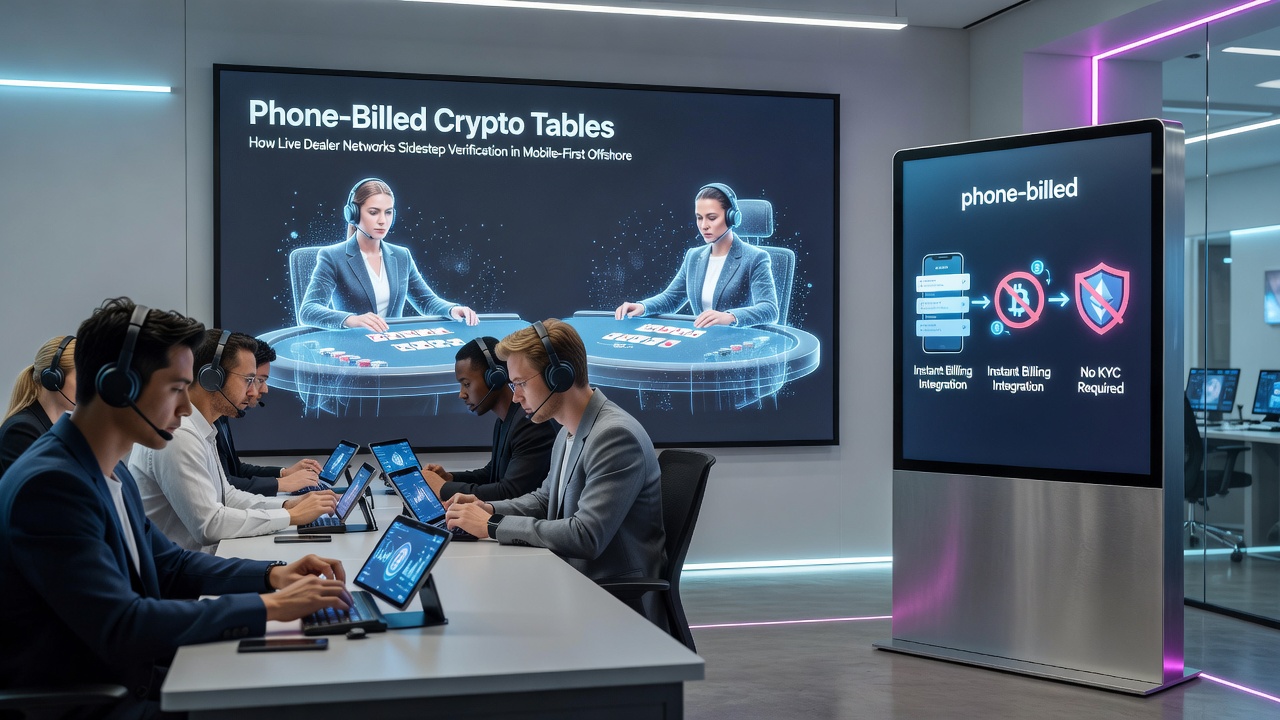
Encryption protocols wrap the billing token and crypto address together, creating a single transaction record that telecoms and blockchain explorers each see only partially. Observers who have reviewed compliance filings note that this separation reduces the points at which a full identity profile must be assembled, although some jurisdictions still require eventual reconciliation for anti-money-laundering purposes. Data released in August 2026 by Canadian provincial regulators highlighted similar segmented approaches among platforms targeting cross-border mobile users.
Technical Infrastructure Supporting These Operations
Cloud-based gaming servers located in multiple offshore data centers handle live video streams while maintaining independent connections to billing gateways and blockchain nodes. Load-balancing systems route traffic through different IP ranges depending on whether the session uses phone billing or direct crypto funding, which helps isolate the two payment rails. Studies from university research groups in Singapore have documented how these routing choices affect latency and regulatory visibility, showing that mixed-payment tables often operate on parallel virtual networks within the same physical facility.
Conclusion
Phone billing paired with crypto settlement continues to shape live dealer access across mobile-first offshore zones, with transaction patterns documented through 2026 indicating sustained use of segmented verification processes. Regulatory summaries from multiple regions and industry tracking reports provide the primary sources for understanding these mechanics without relying on single-jurisdiction data. The combination of carrier tokens and blockchain records allows operators to maintain separate compliance pathways, and ongoing monitoring by various authorities shows the model remains active in markets that permit such structures.